11 – 20 April 2015
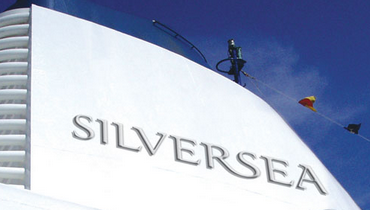
Join Wine Diva Deb on a Distinctive Voyage on SilverSea’s Silver Cloud exploring the ports of Barcelona, Monte Carlo, Sorrento, Amalfi, Athens and more. With overnight stays in Monte Carlo, Sorrento and Piraeus this will be a cruise full of memories.
 |
 |
 |
Voyage Details
| Date | Port/City | Arrival | Depart |
| Sat 11 Apr | Barcelona, Spain | 6:00pm | |
| Sun 12 Apr | Monte Carlo, Monaco | 1:00pm | |
| Mon 13 Apr | Monte Carlo, Monaco | 4:00pm | |
| Tue 14 Apr | Civitavecchia (Rome), Italy | 8:00am | 7:00pm |
| Wed 15 Apr | Sorrento, Italy | 8:00am | |
| Thu 16 Apr | Sorrento, Italy | 9:00am | |
| Thu 16 Apr | Amalfi | 1:00pm | 7:00pm |
| Fri 17 Apr | Taormina, Italy | 8:00am | 5:00pm |
| Sat 18 Apr | Katakolon (Olympia), Greece | 1:00pm | 7:00pm |
| Sun 19 Apr | Itea, Greece | 8:00am | 1:00pm |
| Sun 19 Apr | Corinth Canal, Greece | 4:45pm | 6:45pm |
| Sun 19 Apr | Piraeus (Athens), Greece | 10:00pm | |
| Mon 20 Apr | Piraeus (Athens), Greece |
Port Details
 Barcelona, Spain
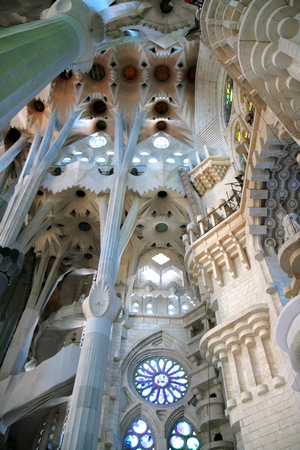
Capital of Catalonia, 2,000-year-old Barcelona commanded a vast Mediterranean empire when Madrid was still a dusty Moorish outpost on the Spanish steppe. Relegated to second-city status only in 1561, Barcelona has long rivaled and often surpassed Madrid’s supremacy. Catalans jealously guard their language and their culture. Barcelona has long had a frenetically active cultural life. It was the home of architect Antoni Gaudí, and the painters Joan Miró and Salvador Dalí. Pablo Picasso also spent his formative years in Barcelona. Native musicians include cellist Pablo (Pau, in Catalan) Casals, opera singers Montserrat Caballé and José (Josep) Carreras, and early-music master Jordi Savall. One of Europe’s most visually stunning cities, Barcelona balances its many elements, from the medieval intimacy of its Gothic Quarter to the grace of the wide boulevards in the moderniste Eixample. In the 21st century innovative structures, such as the Ricardo Bofill vela (sail) hotel, demonstrate Barcelona’s insatiable appetite for novelty and progress.
Monte Carlo, Monaco
In 1297 the Grimaldi family seized this fortified town and, except for a short break under Napoléon, they have ruled here ever since. The Principality of Monaco covers 473 acres; it would fit comfortably inside New York’s Central Park while its 5,000 citizens would fill only a small fraction of the seats in Yankee Stadium. The Grimaldis made money from gambling and attracted a well-heeled, monied crowd, but the whole world watched as Hollywood princess Grace Kelly wed Prince Rainier ruler of Monaco to put this place on the map. It’s the very favorable tax system, not the gambling, that makes Monaco one of the most sought-after addresses in the world, and the principality bristles with gleaming high-rise apartment complexes owned by tax exiles. But at the town’s great 1864 landmark Hôtel de Paris-still a veritable crossroads of the buffed and befurred Euro-gentry-at the Opéra, or the ballrooms of the Casino, you’ll still be able to conjure up Monaco’s belle epoque.
Civitavecchia, Italy
Rome is a heady blend of artistic and architectural masterpieces, classical ruins, and opulent baroque churches and piazzas. The city’s 2,700-year-old history is on display wherever you look; the ancient rubs shoulders with the medieval, the modern runs into the Renaissance, and the result is a bustling open-air museum. Julius Caesar and Nero, the Vandals and the Popes, Raphael and Caravaggio, Napoléon and Mussolini-these and countless other luminaries and villains have left their mark on the city. Today Rome’s formidable legacy is kept alive by its people, their history knit into the fabric of their everyday lives. Raphaelesque teenage girls zip through traffic on their motorini; priests in flowing robes talking on cell phones stride through medieval piazzas. Modern Rome has one foot in the past, one in the present-a fascinating stance that allows you to tip back an espresso while gazing at a Bernini fountain, then hop on the metro to your next attraction.
Sorrento, Italy
As you journey down the fabled Amalfi Coast, the route takes you past rocky cliffs plunging into the sea and small boats lying in sandy coves like brightly colored fish. Erosion has contorted the rocks into shapes resembling figures from mythology and hollowed out fairy grottoes where the air is turquoise and the water an icy blue. White villages dripping with flowers nestle in coves or climb like vines up the steep, terraced hills. Lemon trees abound, loaded with blossom or fruit-and netting in winter to protect the fruit. The inhabitants jest that they look after their lemons better than their children. The road must have a thousand turns, each with a different view, on its dizzying 69-km (43-mi) journey from Sorrento to Salerno. Venture north, and you can fall under the spell of Pompeii’s silent streets, frozen in time under the dust of 25 centuries.
Amalfi
Located roughly between Salerno and Sorrento, Amalfi was already an important maritime republic in the Middle Ages. In fact, the Amalfi Tables represent the oldest maritime code in the world, which were observed throughout the Mediterranean until the late 16th century.
Today, Amalfi is one of the most popular resorts and stopovers along the famed Amalfi Drive, Italy’s celebrated corniche that hugs the mountainous coast and carves its way through sheer rock. Opulent villas, cloaked in brilliantly colored bougainvillea, hide behind high walls and wrought-iron gates. Waves pound against the steep shoreline and tortuous bends challenge a steady stream of tourist vehicles. Around every hairpin turn spectacular scenery awaits.
Spread across the slope of the steep Lattari hills, the town itself boasts a superb setting and plenty of charm. The small, inviting center features several attractions that should not be missed. Of particular note is the duomo, also known as Cathedral Sant’Andrea, a marvel of ancient Arab-Moorish architecture. The church dominates the lively piazza, full of shops and crowded with residents and tourists at any time of day.
Ruggedly beautiful and enchanting Amalfi will guarantee you a delightful introduction to Italy’s famed coastline.
Taormina (Naxos), Italy
Sicily has beckoned seafaring wanderers since the trials of Odysseus were first sung in Homer’s Odyssey. Strategically poised between Europe and Africa, this mystical volcanic land has been a melting pot of every great civilization on the Mediterranean: Greek and Roman; then Arab and Norman; and finally French, Spanish, and Italian. Today Sicily fuses the remains of sackings past: graceful Byzantine mosaics rubbing elbows with Greek temples, Roman amphitheaters, Romanesque cathedrals, and baroque flights of fancy. Messina’s ancient history lists a series of disasters, but the city nevertheless managed to develop a fine university and a thriving cultural environment. On December 28, 1908, Messina changed from a flourishing metropolis of 120,000 to a heap of rubble, shaken to pieces by an earthquake that turned into a tidal wave and left 80,000 dead and the city almost completely leveled. For this reason there are few historical treasures but the town makes a good jumping off point for explorations of other treasures.
Katakolon, Greece
Katakolon could not seem less of a cruise port if it tried. A tiny enclave clinging to the western Peloponnese coast, it’s a sleepy place except when ships dock. But it’s a popular cruise destination because of its proximity to Olympia. Ancient Olympia was one of the most important cities in classical Greece. The Sanctuary of Zeus was the city’s raison d’être, and attracted pilgrims from around the eastern Mediterranean, and later the city played host to Olympic Games, the original athletic games that were the inspiration for today’s modern sporting pan-planetary meet. At the foot of the tree-covered Kronion hill, in a valley near two rivers, Katakolon is today one of the most popular ancient sites in Greece. If you don’t want to make the trip to Olympia, then Katakolon is an ideal place for a leisurely Greek lunch while you watch the fishermen mend their nets, but there’s just not much else to do there.
Located at the foot of the pine-covered Kronion hill, and set in a valley where the Kladeos and Alpheios rivers join, Ancient Olympia is one of the most celebrated archaeological sites in Greece. Home to a sacred sanctuary dedicated to Zeus, Olympia also became famed as the host of the Olympic Games. Just as athletes from city-states throughout ancient Greece made the journey to compete in the ancient Olympics-the first sports competition-visitors from all over the world today make their way to the small modern Arcadian town that appears to have been already been a legend as long ago as the 10th century BC. The Olympic Games, first staged around the 8th century BC, were played here in the stadium, hippodrome, and other venues for some 1,100 years. Today, the venerable ruins of these structures attest to the majesty and importance of the first Olympiads. Modern Olympia, an attractive mountain town surrounded by pleasant hilly countryside, has hotels and tavernas, convenient for visitors to the ancient site.
As famous as the Olympic Games were-and still are-Olympia was first and foremost a sacred place, a sanctuary honoring Zeus, king of the gods, and Hera, his wife and older sister. To honor the cult of Zeus established at Olympia as early as the 10th century BC, altars were first constructed outdoors, among the pine forests that encroach upon the site. But around the turn of the 6th century BC, the earliest building at Olympia was constructed, the Temple of Hera, which originally honored Zeus and Hera jointly, until the Temple of Zeus was constructed around 470 BC. The Temple of Zeus was one of the finest temples in all of Greece. Thirteen columns flanked the sides, and its interior housed the most famous work of ancient Greece-a gold and ivory statue of Zeus. Earthquakes in 551 and 552 finished off the temple.
After the Treasuries, the Bouleuterion, and the Pelopeion were built, the 5th and 4th centuries BC, the Golden Age of the ancient games, saw a virtual building boom. The monumental Temple of Zeus, the Prytaneion, and the Metroon went up at this time. The enormous Leonidaion was built around 300 BC, and as the games continued to thrive, the Palaestra and Gymnasion were added to the complex.
Today’s tranquil pine-forested valley at Olympia, set with weathered stones of peaceful dignity, belies the sweaty drama of the first sporting festivals. Stadium foot-races run in the nude; pankration wrestling so violent today’s Ultimate Fighting matches look tame; week-long bacchanals-serviced by an army of pornoi and prostitutes-held in the Olympic Village: Little wonder this ancient event is now called the “Woodstock of its day” by modern scholars (wrestlers, boxers, and discus-throwers being the rock stars of ancient Greece).
Itea, Greece
Itea is a town and a former municipality in the southeastern part of Phocis, Greece. In 2011, it became part of the municipality of Delphi. Itea proper is situated on the north coast of the Gulf of Corinth, one mile (two kilometres) west of Kirra, five miles (eight kilometres) southwest of Delphi, seven miles (11 kilometres) south of Amfissa and 32 miles (52 kilometres) east of Naupactus. The Greek National Road 48 connects Itea with Naupactus, Delphi and Livadeia, and the Greek National Road 27 connects Itea with Amfissa and Lamia. The community of Itea covers an area of 2.4 square miles (6.3 square kilometres), while the municipal unit covers an area of 10.1 square miles (26.4 square kilometres).
The Port of Itea is the gateway for a visit to Delphi, one of the world’s most intriguing and best-preserved ancient sites. Located deep in the Parnassus Mountains, Delphi was the site of the ancient Delphi Oracle and once believed to be the centre of the world. Beginning in the 8th century B.C., pilgrims from all walks of life made great physical sacrifices to climb the 2,000-foot (615-metre) mountain to seek guidance from the Pythian priestess. It is said that she was an intermediary for those looking for advice and guidance from the Oracle. The recipients expressed their thanks with generous offerings, which were stored in various treasuries and brought great wealth to Delphi. During a period of Roman occupation in the 2nd century B.C., these valuables gradually began to disappear. Today, Delphi retains its mass appeal due to its historical significance and aesthetic beauty. Ruins of many ancient temples and other monuments remain, along with various masterpieces of ancient art.
Itea offers convenient access to a wealth of wonderful cultural and historic treasures in various picturesque locales throughout the Delphi region. Pass through olive groves and take in magnificent vistas of the Gulf of Itea whilst ascending the slopes of Mount Parnassus en route to ancient Delphi. During a visit here, marvel at a wealth of sites of antiquity that include Prophet Ilias Monastery, Archaeological Museum of Delphi, Delphi Stadium and Amphitheatre, Sanctuary of Apollo, Kastalian Spring, the Sacred Way, and more.
Itea’s is highlighted by a picturesque harbour and waterfront highlighted by numerous shops and cafes. Popular beaches include Benicassim and Itea, which features shady willow trees that offer a welcome respite from the summer heat, along with a host of nearby accommodations, restaurants and cafés. Itea’s abundant coastal waters serve as an ideal launching point for water sports that include swimming, snorkelling, scuba diving, fishing, sailing, boating, sea-kayaking, and a wide array of other popular outdoor excursions during your visit.
Due to its compact size, Itea can be easily explored in just a single day.
Piraeus, Greece
If you come to Athens in search of gleaming white temples, you may be aghast to find that much of the city has melded into what appears to be a viscous concrete mass. Amid the sprawl and squalor, though, the ancient city gives up its treasures. Lift your eyes 200 feet above the city to the Parthenon, and you behold architectural perfection that has not been surpassed in 2,500 years. Today this shrine of classical form, this symbol of Western civilization and political thought, dominates a 21st-century boomtown. To experience Athens fully is to understand the essence of Greece: tradition juxtaposed with a modernity that the ancients would strain to recognize but would heartily endorse. Ancient Athens is certainly the lure for the millions of visitors to the city, but since the late 1990s, inspired by the 2004 Olympics, the people have gone far toward transforming Athens into a sparkling modern metropolis.
On Board Inclusions
- Intimate ship (296 to 540 Guests) extraordinary space per guest ratio
- Superlative service – nearly one crew member for every guest
- Enrichment lecturers, acclaimed chefs and destination consultants
- Sophisticated entertainment from live music to production shows
- Gourmet cuisine inspired by Relais & Châteaux
- Alternative dining options – multiple venues
- Open-seating in The Restaurant – no assigned time, no assigned table
- Butler service for all ships, all guests
- All ocean-view suites, over 85% with private verandas
- Gratuities
- In-suite dining and 24 hour room service
- Complimentary beverages in-suite and throughout the ship (wines, champagnes, premium spirits, speciality coffees, bottle water, juices and soft drinks
Pricing Details* (per person US$)
*Airfare not included in prices listed
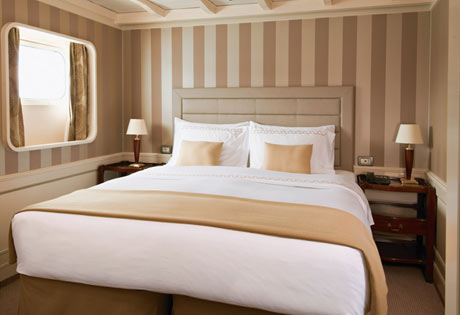 |
Royal Suite | $10,550 |
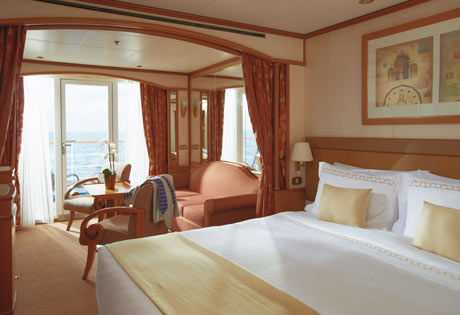 |
Midship Veranda Suite | $5,250 |
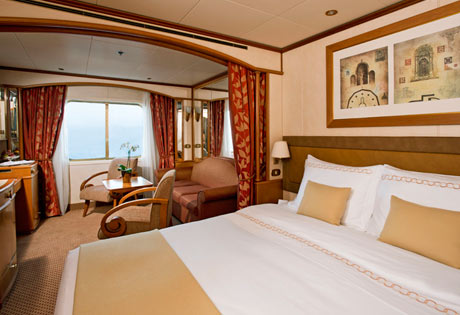 |
Vista Suite | $3,950 |
A quiet sanctuary. The sitting area has plenty of room to relax. Large picture windows frame panoramic ocean views. The perfect backdrop for breakfast in bed. Some Vista Suites accommodate three guests.
To Reserve your space
Send email to: winedivadeb@yahoo.com or call Wine Diva Deb on 206-617-6160.
A deposit of $1,100/cabin or $2,220/Suite is required.
All reservations based on double occupancy. Non refundable $25 booking fee will apply to all booking. Travel Insurance highly recommended as well as Personal & Medical Insurance.